Rupa Kurinchi-Vendhan
AI for Scientific Discovery and Biodiversity Monitoring
Hello! I am a second-year Ph.D. student at MIT CSAIL, advised by Professor Sara Beery and supported by the NSF Graduate Research Fellowship and the MIT Tina Chan Fellowship. My research focuses on AI for scientific discovery, integrating experts-in-the-loop with remote sensing images and abstract soundscapes to monitoring biodiversity at scale. Previously, I received my B.S.c. in Computer Science at Caltech, where I conducted various remote sensing-based computer vision projects for land cover classification and solar and wind mapping.
Selected Research
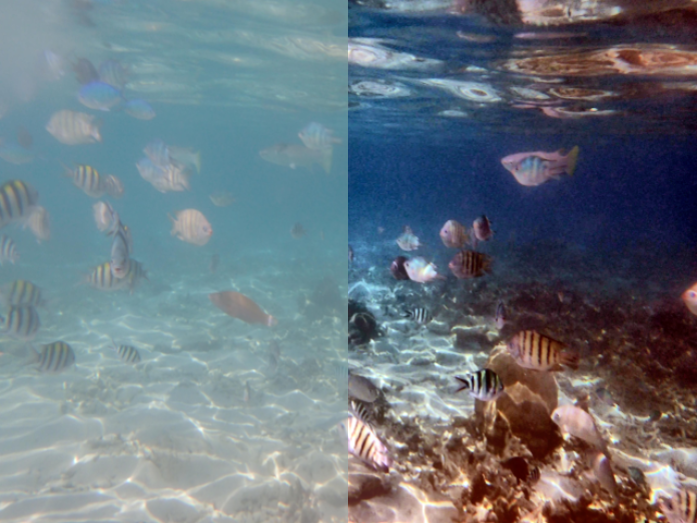
Seeing Through the PRISM: Controllable & Compositional Image Restoration for Science
Rupa Kurinchi-Vendhan, Pratyusha Sharma, Antonio Torralba, Sara Beery
International Conference on Learning Representations (ICLR) | 2026
PRISM is a prompted conditional diffusion framework combining compound-aware supervision with weighted contrastive disentanglement for high-fidelity restoration of complex, interacting degradations in scientific imagery. It enables both automatic restoration and expert-driven selective correction across microscopy, wildlife monitoring, remote sensing, and environmental domains while maintaining downstream task fidelity.
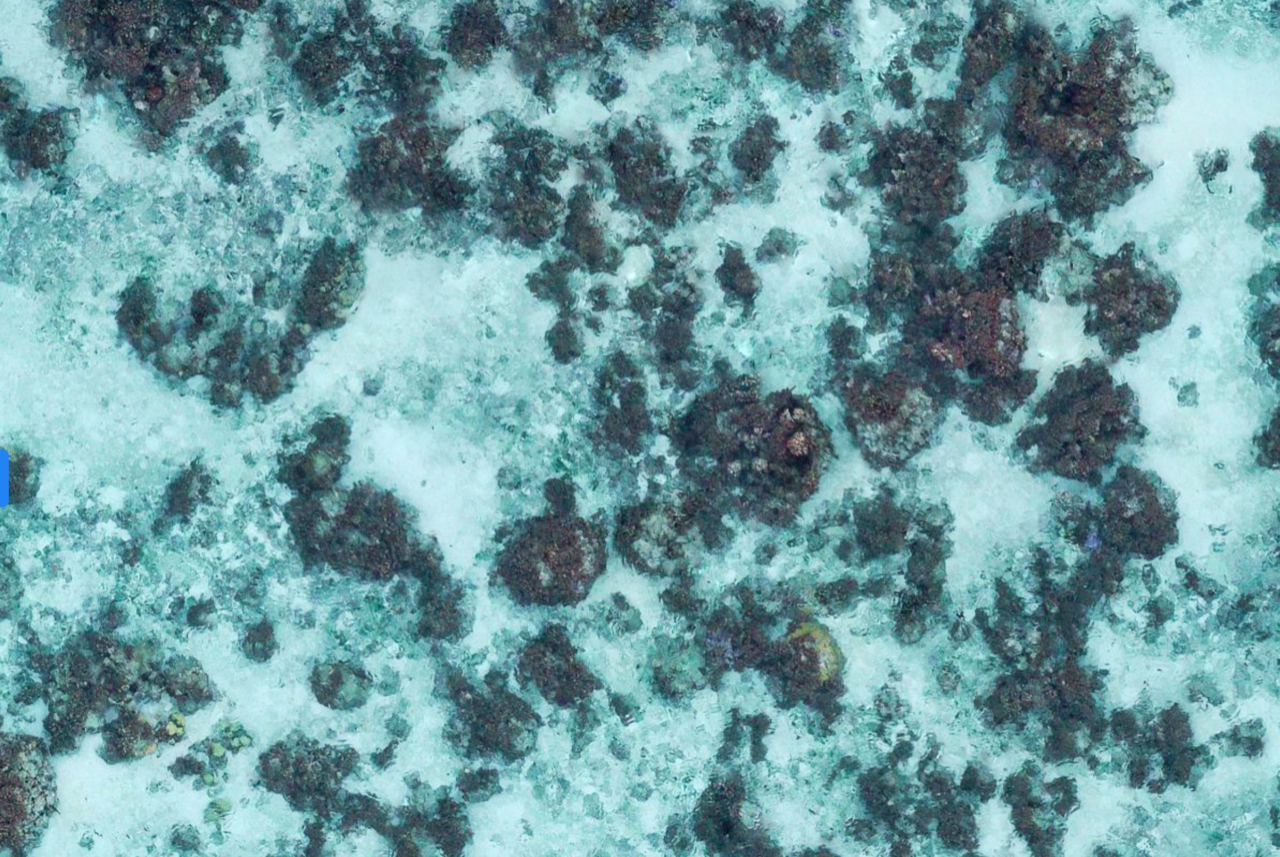
BenthIQ: a Transformer-Based Benthic Classification Model for Coral Restoration
Rupa Kurinchi-Vendhan, Drew Gray, Elijah Cole, Pietro Perona
arXiv pre-print arXiv:2311.13661 | 2023
Developed a novel transformer-based neural network capable of multi-label benthic classification, taking processed drone imagery as input and identifying pixels as coral cover, rocks, rubble, sand, algae, etc. This model will be used to inform restoration efforts by providing actionable, specific evidence of where corals should be planted (in areas of higher relative live coral cover).
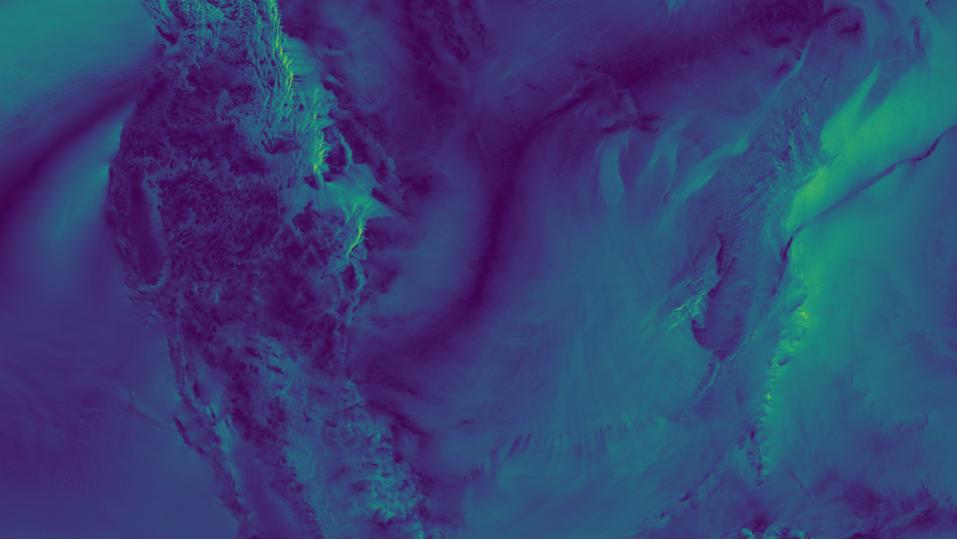
WiSoSuper: Benchmarking Super-Resolution Methods on Wind and Solar Data
Rupa Kurinchi-Vendhan, Björn Lütjens, Ritwik Gupta, Lucien Werner, Dava Newman
NeurIPS CCAI Tackling Climate Change with Machine Learning Workshop | 2021
An accepted paper at the NeurIPS CCAI Tackling Climate Change with Machine Learning 2021 Workshop. We modified existing deep learning-based super-resolution models, and applied them to satellite data to increase the resolution of wind speeds and solar irradiance fields for informing short-term, local energy planning.
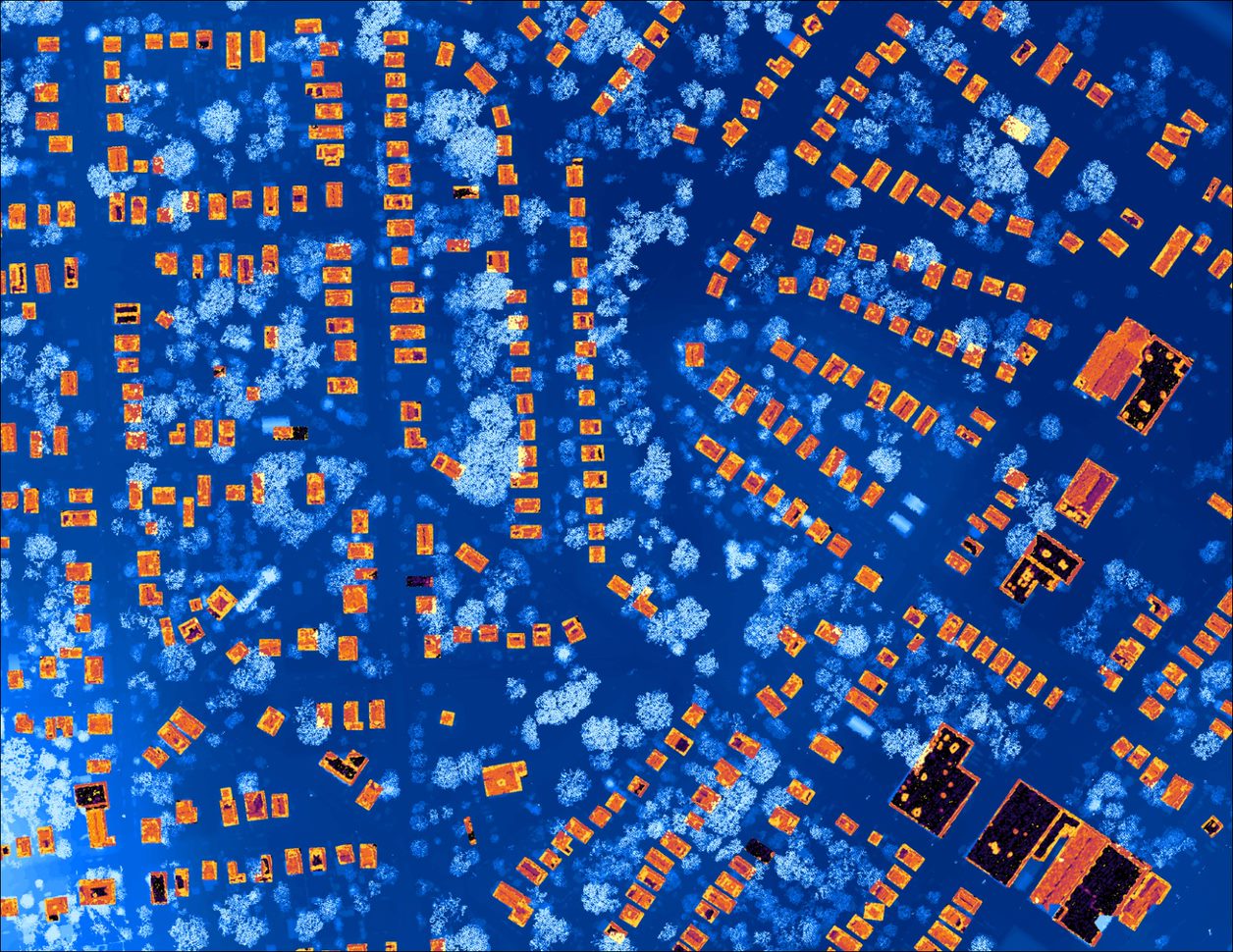
Washington, D.C. & Maryland Energy: Estimating Solar Potential Using NASA POWER Data to Inform Renewable Energy Policy
Edward Cronin*, Ashley Fernando*, Jared James*, Rupa Kurinchi-Vendhan*
NASA Technical Reports | 2021
Through NASA's DEVELOP National Program, we worked with the Langley Research Center (LaRC) and partnered with Washington DC's Department of Energy and Environment (DOEE) to create solar potential maps to inform solar panel installation decisions for the District.
Talks
Benthic Classification for Reef Restoration
- July 2025: Break Through Tech AI, Massachusetts Institute of Technology
- April 2025: Ocean Engineering Seminar, Massachusetts Institute of Technology
- November 2023: Berkeley AI Research (BAIR) Climate Initiative, University of Berkeley
- November 2023: International Education Week, California Institute of Technology
- October 2023: Doris S. Perpall Speaking Competition, California Institute of Technology
Renewable Energy Forecasting
- June 2023: WiREDiff: a Wind Resolution-Enhancing Diffusion Model — Advanced Topics in Machine Learning Project Showcase
- December 2021: WiSoSuper: Benchmarking Super-Resolution Methods on Wind and Solar Data — NeurIPS CCAI Tackling Climate Change with Machine Learning 2021 Workshop Poster Session
- November 2021: Estimating Solar Potential Using NASA POWER Data to Inform Renewable Energy Policy for Washington, D.C. — NASA Earth Science DEVELOP National Symposium
Miscellaneous
- September 2022: Atlas Packing for Volumetric Rendering — Apple Board of Technology Directors
Teaching
1.091: Traveling Research Environmental Experiences
Teaching Assistant
MIT | January 2026
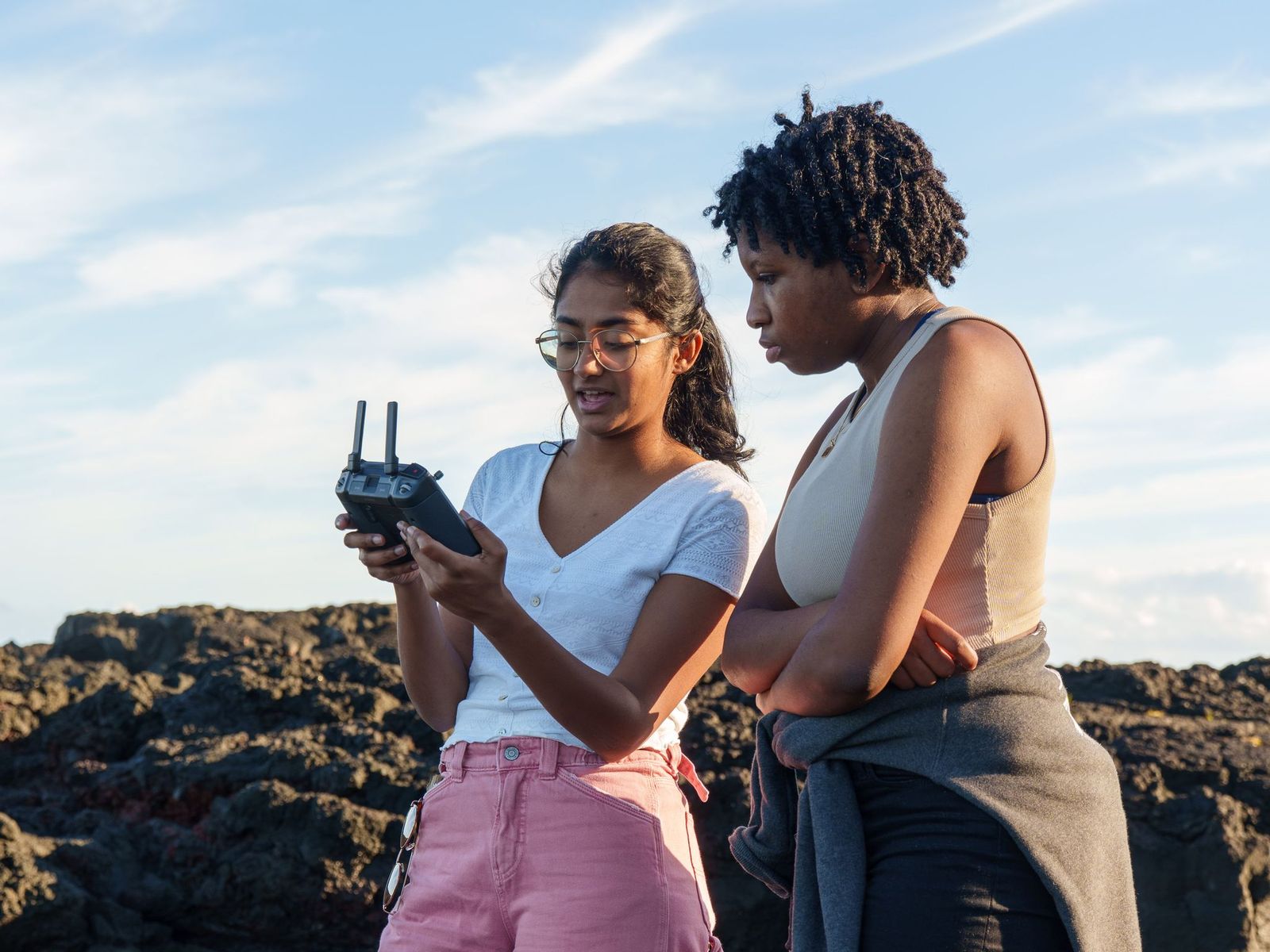
Co-led environmental science undergraduates on a 2-week project for mapping the shallow water reefs on the Big Island of Hawai'i.
Gave lecture on computer vision and machine learning and led field work to collect drone imagery for benthic classification.
Deep Learning for Ecology
Visiting Lecturer

African Institute of Mathematical Science, Cape Town, South Africa | December 2024
Organized week-long lectures and coding sessions for 10 students on fundamentals of computer vision
and its applications in ecology. Assisted students on an object detection-based African Penguin
activity heat-mapping pipeline in collaboration with the Two Oceans Aquarium in Cape Town.
Course Webpage: https://sites.google.com/aims.ac.za/dl4ecology-course.
Outreach
- October 2025: Co-organized the Computer Vision for Ecology (CV4E) Workshop at ICCV 2025.
- October 2025: Co-organized the Joint Workshop on Marine Vision at ICCV 2025.
- May 2026: Co-organizing the BioDCASE Active Learning Challenge.
-
© Rupa Kurinchi-Vendhan. All rights reserved. Design: HTML5 UP